



Is Rice Water Worth the Hype? Why Science Beats the DIY Trend
Introduction: The "Glass Skin" Promise
If you’ve scrolled through TikTok lately, you’ve almost certainly seen it: influencers soaking rice in bowls, waiting for the water to turn cloudy, and then splashing it on their faces. The promise? "Glass skin," instant brightness, and deep hydration—all from a simple kitchen staple.
It sounds like the perfect natural beauty hack. But as with many viral trends, there’s a gap between the hype and the histology (the microscopic study of your skin).
At Depology, we love innovation, but we prioritize efficacy. So, we asked our formulation team: Is rice water actually doing anything for your skin?
What Is Rice Water, Really?
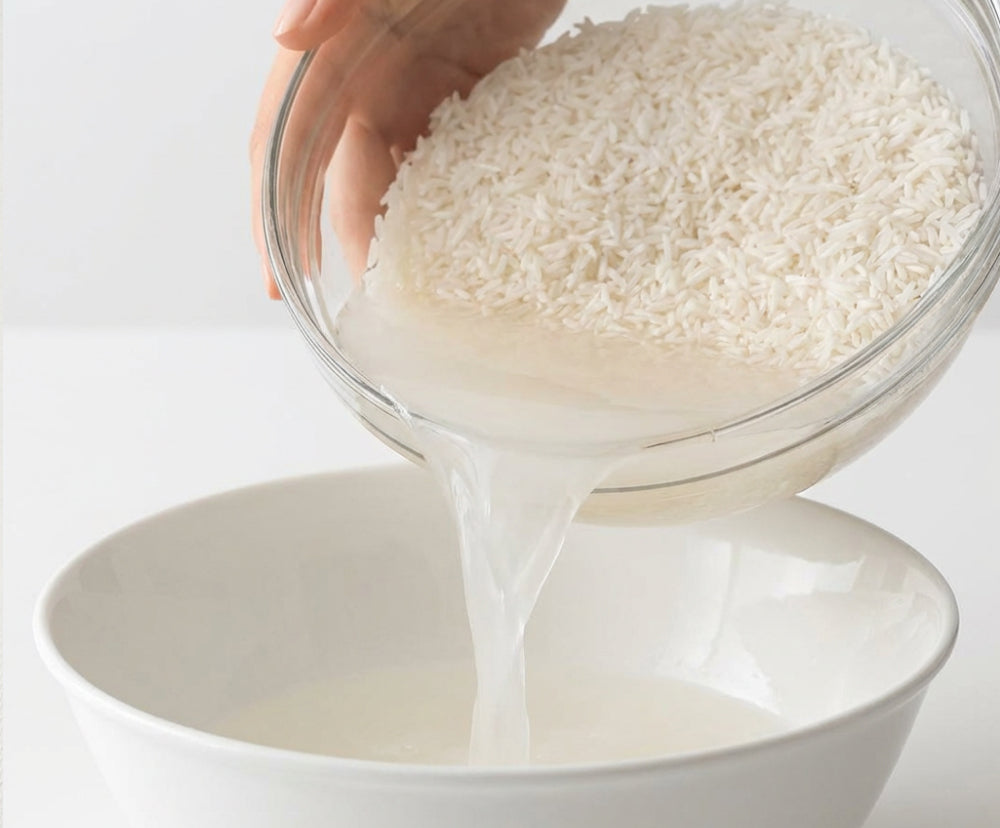
Rice water is simply the starchy liquid left over after soaking or boiling rice. Historically used in parts of Asia for hair and skin, it does contain some beneficial compounds:
- Inositol: A carbohydrate that can help repair damaged hair and skin.
- Vitamins B and E: Known antioxidants.
- Amino Acids: The building blocks of protein.
On paper, this looks great. But in practice (and in a DIY bowl), it’s a different story.

The Problem with DIY Skincare
While the concept of rice water is sound, the execution often fails for three key reasons:
- Molecule Size: The beneficial compounds in raw rice water are often bound to large starch molecules. These are too big to penetrate the skin's barrier effectively. They mostly sit on the surface, creating a temporary film that feels smooth but doesn't provide deep hydration.
- Inconsistency: Every batch of rice is different. You never know what concentration of vitamins you're actually getting.
- Stability & Hygiene: Water is a breeding ground for bacteria. Without preservatives, a bowl of rice water sitting on your counter (or even in your fridge) can spoil quickly, potentially introducing bacteria to your skin that causes breakouts—the exact opposite of what you want.
The Clinical Alternatives: Skip the Prep, Get the Potency
If you’re chasing the results of rice water—soothing hydration and a bright, glassy glow—science offers safer, more effective paths. We’ve isolated the benefits you want and delivered them in stable, high-penetration formulas.
1. For Soothing & Barrier Repair: Choose Cica (Centella Asiatica)
Rice water is often touted for its calming properties. But Centella Asiatica (Cica) is the gold standard for soothing sensitive skin.
Unlike raw starch water, our Cica Recovery Serum uses a concentrated extraction of Cica. It is clinically proven to:
- Calm redness and irritation instantly.
- Repair a compromised skin barrier.
- Provide deep, non-sticky hydration that actually absorbs.
The Verdict: If you want calm, hydrated skin, skip the fermentation risk and go straight for the Cica.
2. For Brightening & "Glass Skin": Choose Retinol
The "glass skin" look comes from smooth texture and light reflection. While rice water might give a temporary surface sheen, Retinol changes your skin's structure.
Our Anti-Aging Retinol Night Cream works by accelerating cell turnover. It brings fresh, new skin cells to the surface, effectively:
- Smoothing out rough texture.
- Fading dark spots and hyperpigmentation.
- Creating a lasting, natural glow that doesn't wash off.
The Verdict: For real transformation and brightness, Retinol is the proven powerhouse.
Conclusion: DIY is Fun, Science is Forever
There is something undeniably satisfying about mixing up your own skincare. And if you enjoy the ritual of a rice water rinse, it likely won't harm you (as long as you keep it fresh!).
But if you are looking for results—measurable improvements in texture, tone, and hydration—trust formulas that are tested, stable, and engineered to penetrate.
Don't just soak your skin; transform it.